In a first for APU, a student-led hackathon challenges aspiring technology professionals to troubleshoot complex Linux systems, develop automation solutions and demonstrate their skills under industry-inspired conditions.
Image
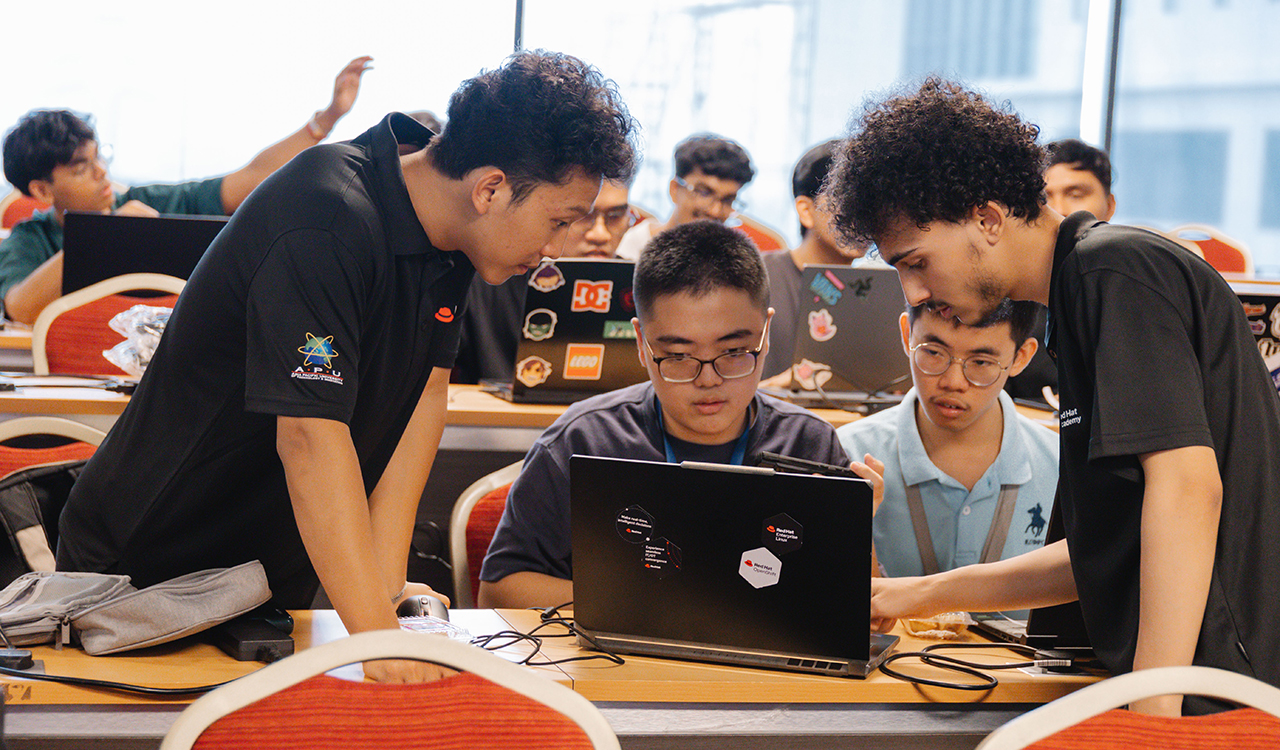
Modern enterprise IT environments often involve repetitive manual tasks, complex systems and growing demands for faster, more efficient operations. The challenge is to develop scalable, production-ready solutions that can simplify and automate day-to-day IT management. For participants of the Red Hat Linux Ops Arena Hackathon, this was more than a hypothetical scenario. It was the challenge they were tasked to solve, using open-source technologies and automation tools within the Red Hat ecosystem.
Held on 5 and 6 September 2026 at the Asia Pacific University of Technology & Innovation (APU), the two-day hackathon brought students face-to-face with the realities of managing, troubleshooting and restoring Linux-based computer systems.
Organised by the Red Hat Club @ APU, which is affiliated with the Red Hat Academy, in partnership with Red Hat Malaysia, the event marked the first Red Hat-focused hackathon organised at APU.
Unlike conventional hackathons, where participants typically develop new applications or products, Linux Ops Arena placed students in the shoes of on-call engineers responsible for keeping critical systems operational.
The experience tested not only their technical knowledge but also their problem-solving abilities, composure under pressure and capacity to develop practical solutions within tight deadlines.
Learning to Think Like an Engineer
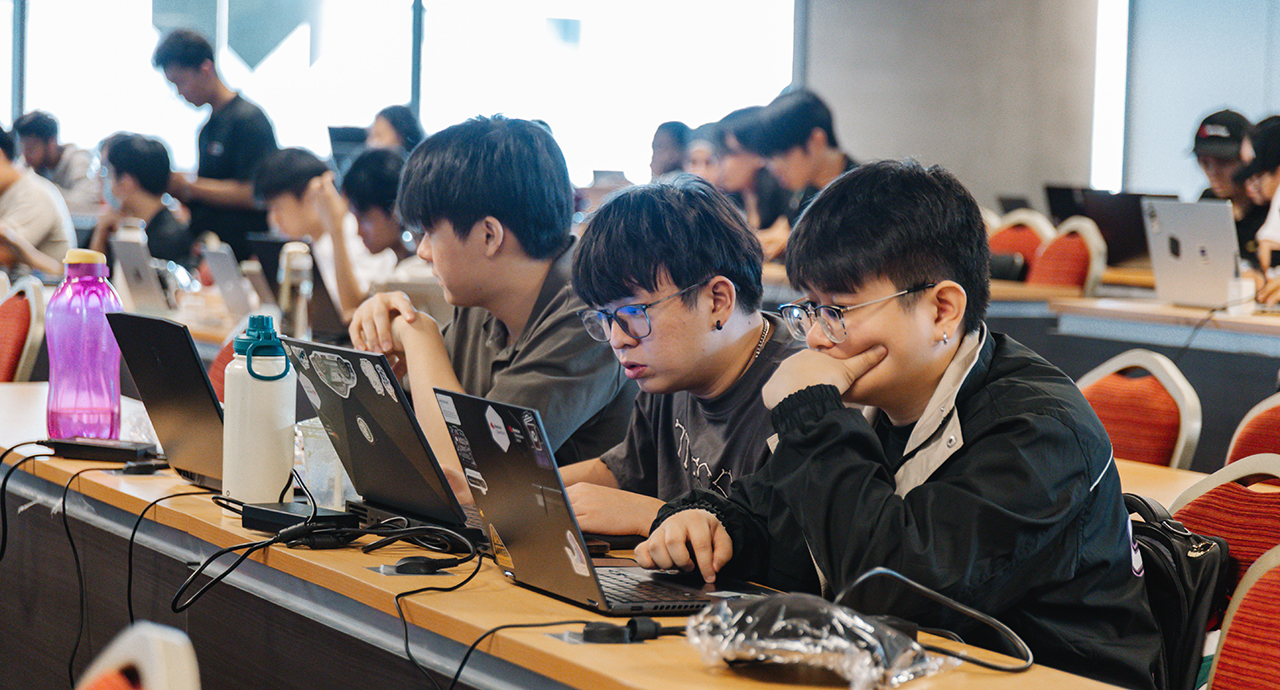
The competition featured two rounds designed to simulate challenges encountered by Linux administrators, cloud engineers and DevOps professionals.
During the qualifying round on 5 September, participants began with fundamental Linux tasks before progressing to a more demanding challenge: diagnosing and repairing a deliberately malfunctioning virtual computer system.
Unknown to the contestants, the system contained 15 hidden faults affecting various services and security configurations. Participants had to identify the problems, determine their causes and restore the system's functionality without being told what had gone wrong.
The exercise closely resembled real-world troubleshooting, where engineers must investigate unexpected system failures and restore services while minimising disruptions.
The top 10 contestants or teams subsequently advanced to the finals on 6 September, where they were required to design and build working automation solutions for an open-ended operational scenario.
Their solutions were evaluated by a judging panel that included representatives from Red Hat Malaysia, based on functionality, implementation quality, technical depth, presentation and potential for further development.
Students Build Their Own Competition Technology
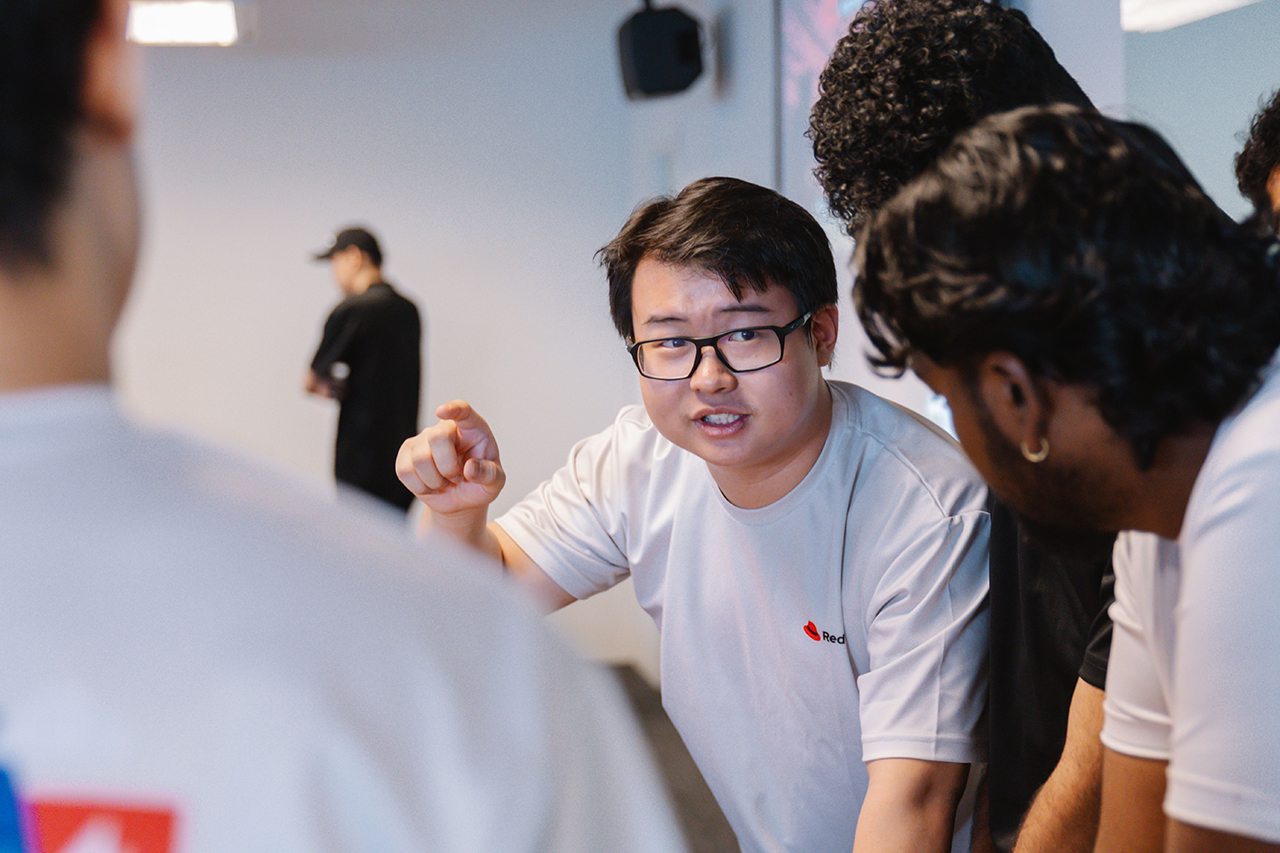
Beyond the participants' achievements, the hackathon also demonstrated the technical capabilities of its student organisers.
Led by Lin Howen, President of the Red Hat Club @ APU and Project Lead of the event, the organising committee spent nearly three months preparing for the competition.
Lin is currently pursuing a Bachelor of Science (Honours) in Computer Science (Cyber Security) at APU.
One of its most significant accomplishments was the development of SysArena, a customised automated scoring platform created entirely by the club's technical team.
Built using the Go programming language, SysArena monitored participants' virtual computer systems and verified their progress every 30 seconds. Scores were updated automatically on a live leaderboard, allowing contestants to track their performance throughout the qualifying round.
This eliminated the need for manual assessment and helped ensure that participants were evaluated objectively based on whether their technical solutions worked.
By developing the competition infrastructure themselves, the student organisers gained experience extending beyond event management into software development, systems engineering and technical operations.
Reflecting on the experience, Lin described the event as a rewarding achievement after months of preparation.
"Bringing a relatively unfamiliar hackathon concept to life and seeing our efforts come together after months of planning and execution is a sense of accomplishment that words can hardly describe," he said.
He added that the competition enabled students to apply their Linux knowledge in realistic situations while strengthening their troubleshooting, automation and teamwork skills.
Celebrating Technical Excellence and Teamwork
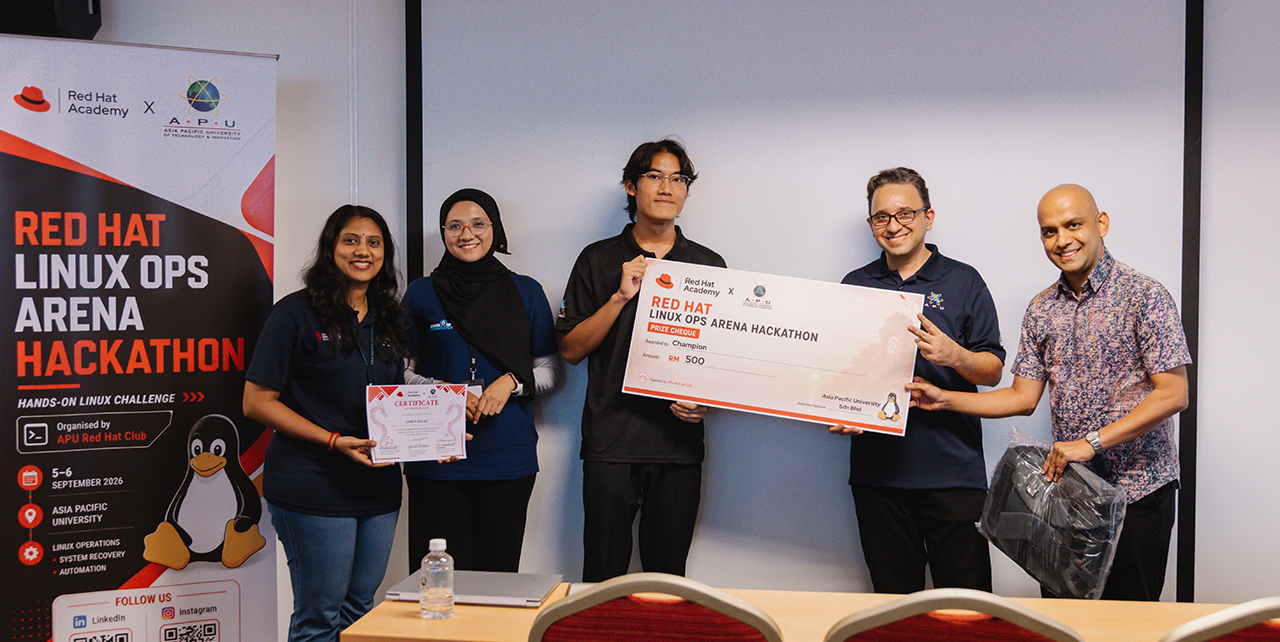
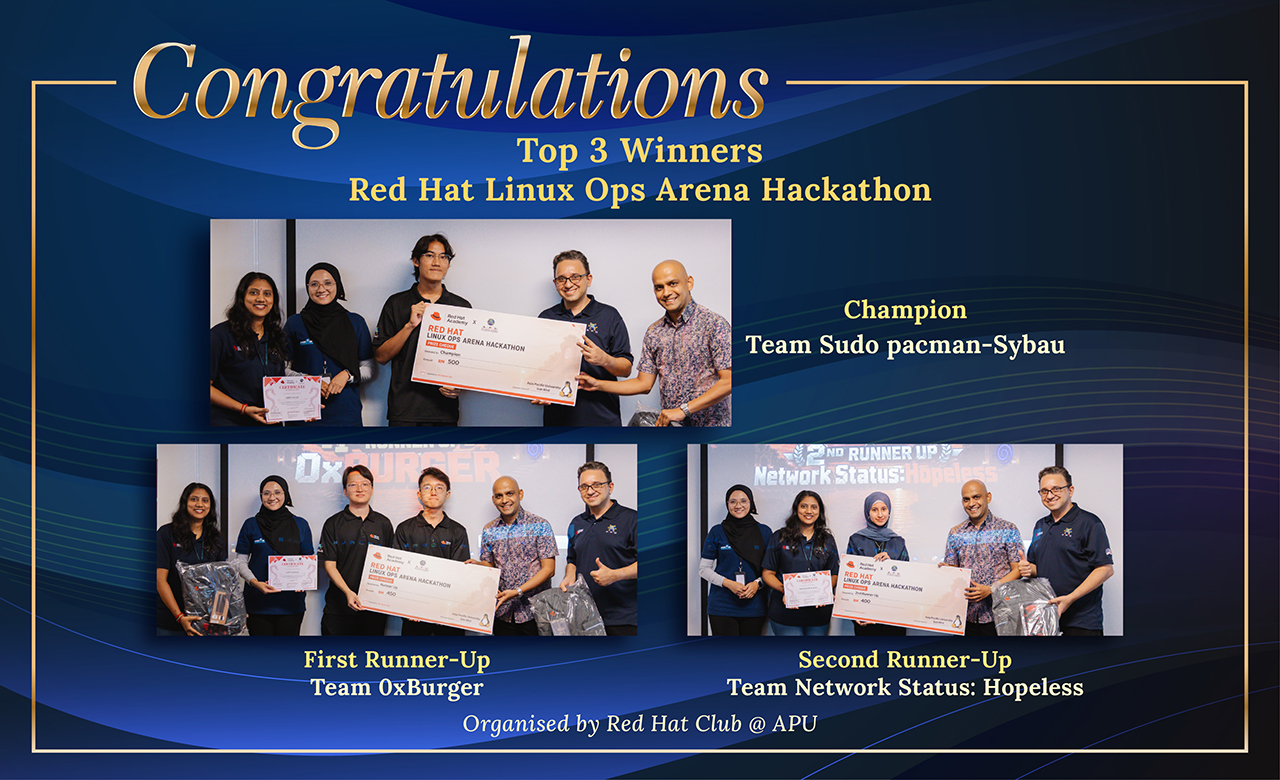
Following two days of intense competition, Team Sudo pacman-Sybau emerged as the Hackathon Champion, while 0xBurger and Network Status: Hopeless secured First and Second Runner-Up positions, respectively.
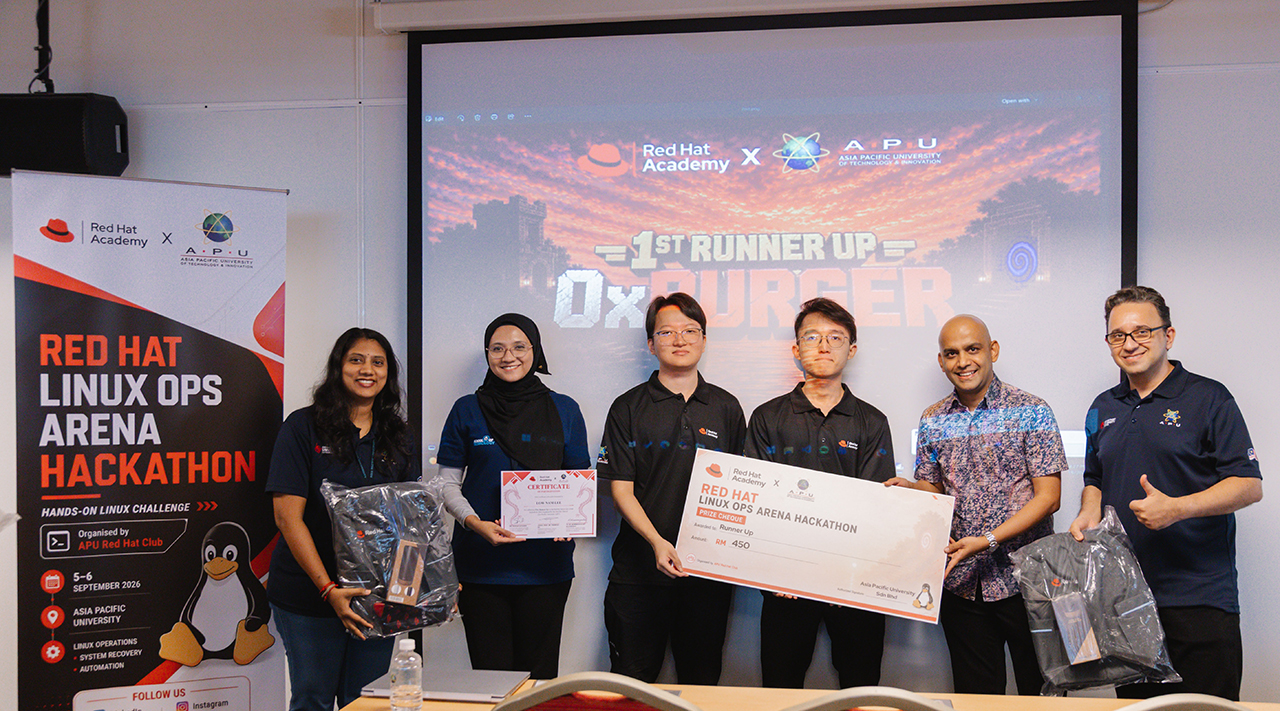
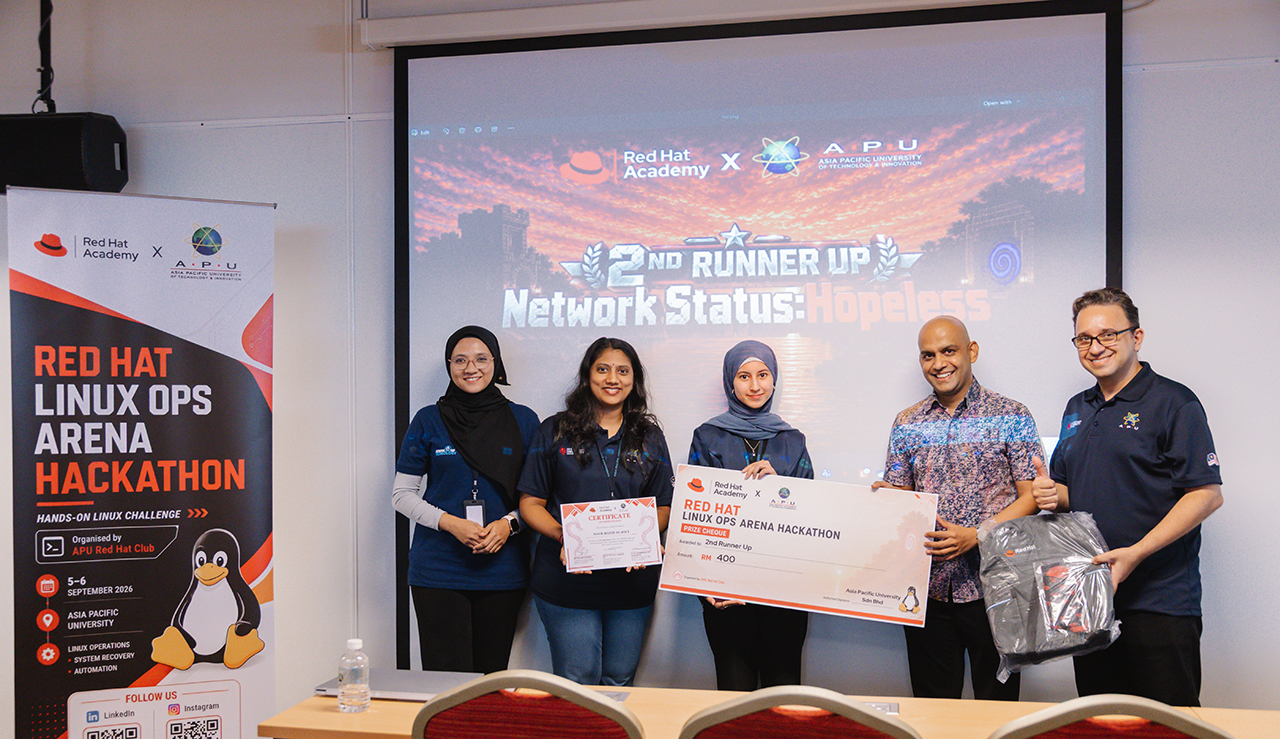
The competition featured a prize pool exceeding RM1,500, with cash prizes and Red Hat merchandise sponsored by Red Hat Malaysia.
Beyond the awards, participants gained practical exposure to Linux system administration, troubleshooting, automation and the demands of maintaining operational systems.
The experience also highlighted the importance of collaboration, communication and adaptability when responding to complex technical challenges.
Bridging Academic Learning and Industry Practice
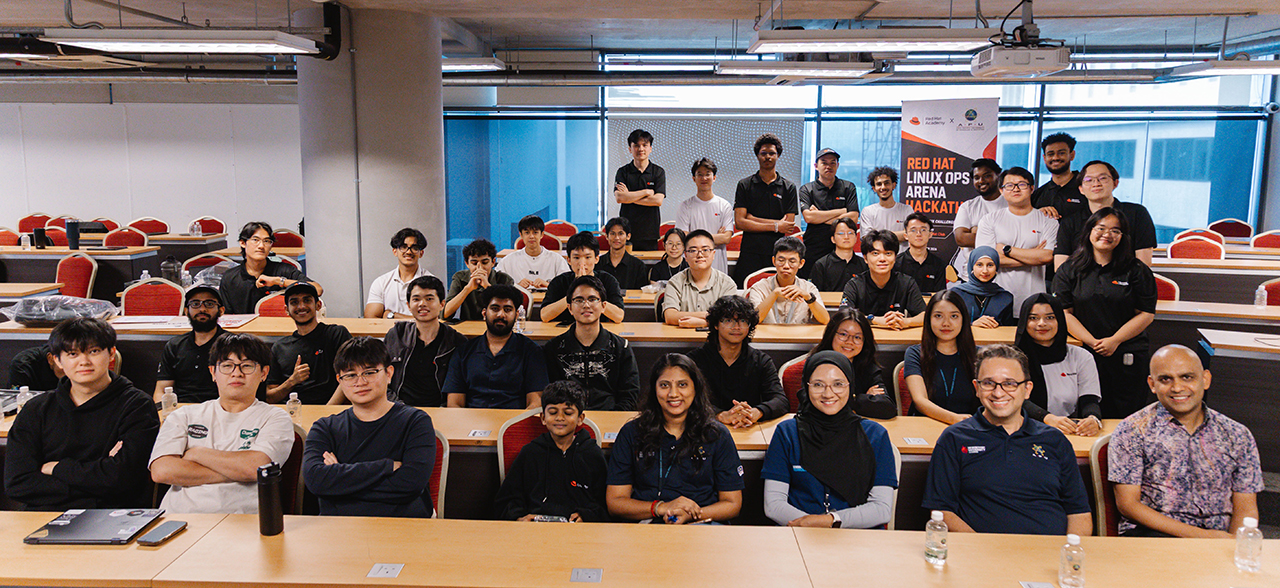
The event was guided by three Red Hat Club advisors: Mr Shahab Alizadeh, Ts Dr Manimegalai Rajenderan and Asst Prof Ts Dr Nurzati Iwani Othman. All three are academics at the School of Technology (SoT), APU.
Red Hat Malaysia representatives Ms Tammy Tan (Country Manager) and Mr Pavan Kumar (Technology Sales Leader) also supported the initiative, including through their participation in the final judging panel and sponsorship of prizes.
Mr Shahab praised the student organisers for demonstrating initiative, professionalism and technical competence in delivering the event.
"I am extremely proud of the APU Red Hat Club members, who dedicated nearly three months to planning and delivering this two-day event with great commitment and professionalism," he said.
He emphasised that the students' accomplishments extended beyond technical skills to include leadership, teamwork and the ability to collaborate with industry professionals.
"These experiences help bridge the gap between academic learning and industry, strengthen their confidence and professional networks, and better prepare them for future careers in areas such as Linux, cloud computing, cybersecurity, DevOps and open-source technologies."
Through initiatives such as Linux Ops Arena, APU continues to encourage student-led innovation and meaningful industry engagement, providing opportunities for students to transform classroom knowledge into practical experience.
More importantly, the hackathon demonstrated that students are capable not only of solving complex technology problems but also of designing, organising and delivering industry-relevant learning experiences for their peers.
News & Happening
Download e-Brochures
Intake Calendar
Want to know more ?
Let’s Connect