APU's Digital Learning Hub-developed Artificial Intelligence Innovative Designs for Education (AIDE) capacity-building series has earned international recognition from BETT Asia and UNESCO in 2026. Having reached over 9,000 educators and students across more than 25 countries, the initiative demonstrates how practical training and ethical guidance can empower education communities to embrace generative AI with confidence and responsibility.
Image
AIDE began as an initiative to help educators and students navigate artificial intelligence (AI) confidently and responsibly, and has since 2023 evolved into an internationally recognised educational framework.
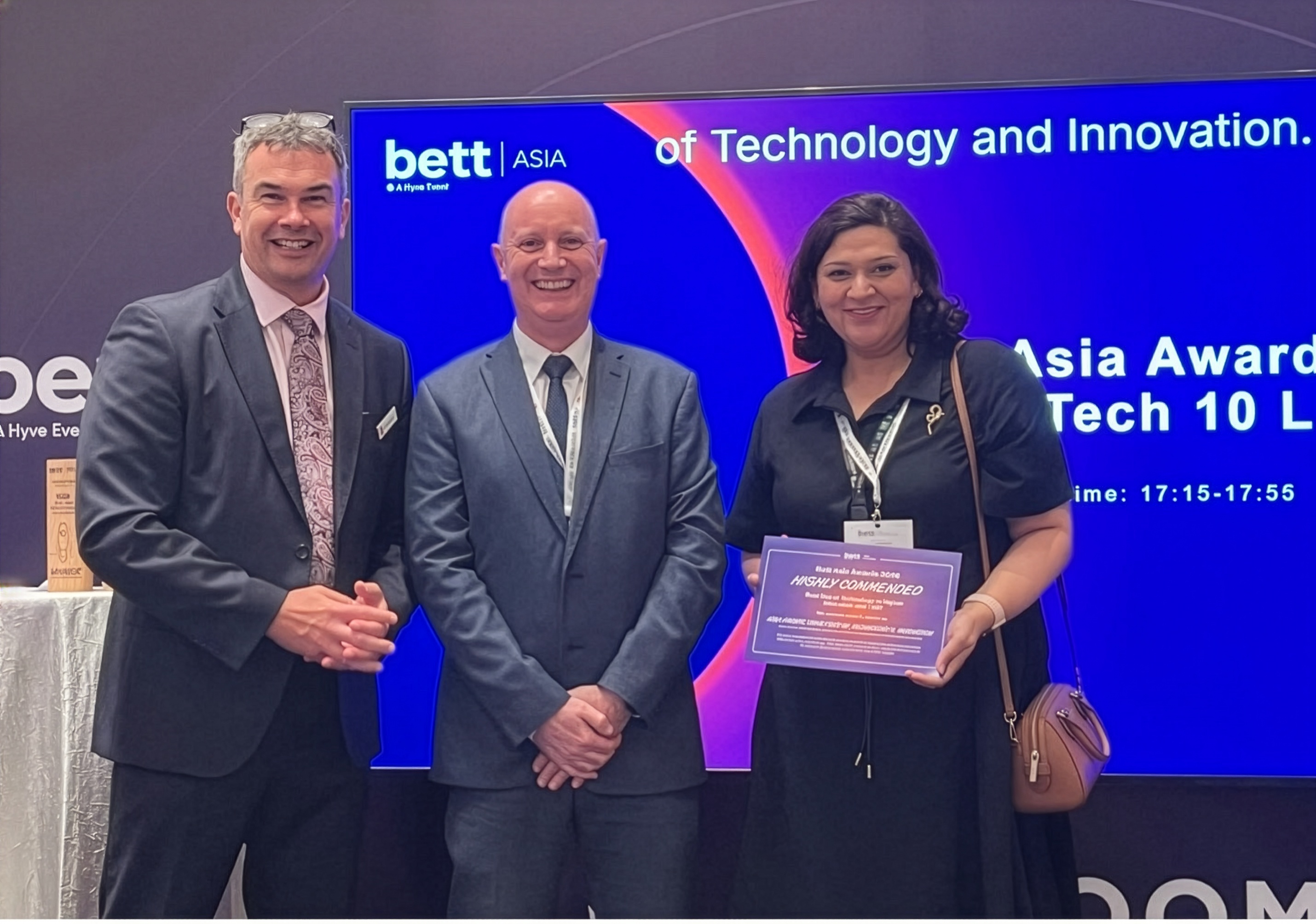
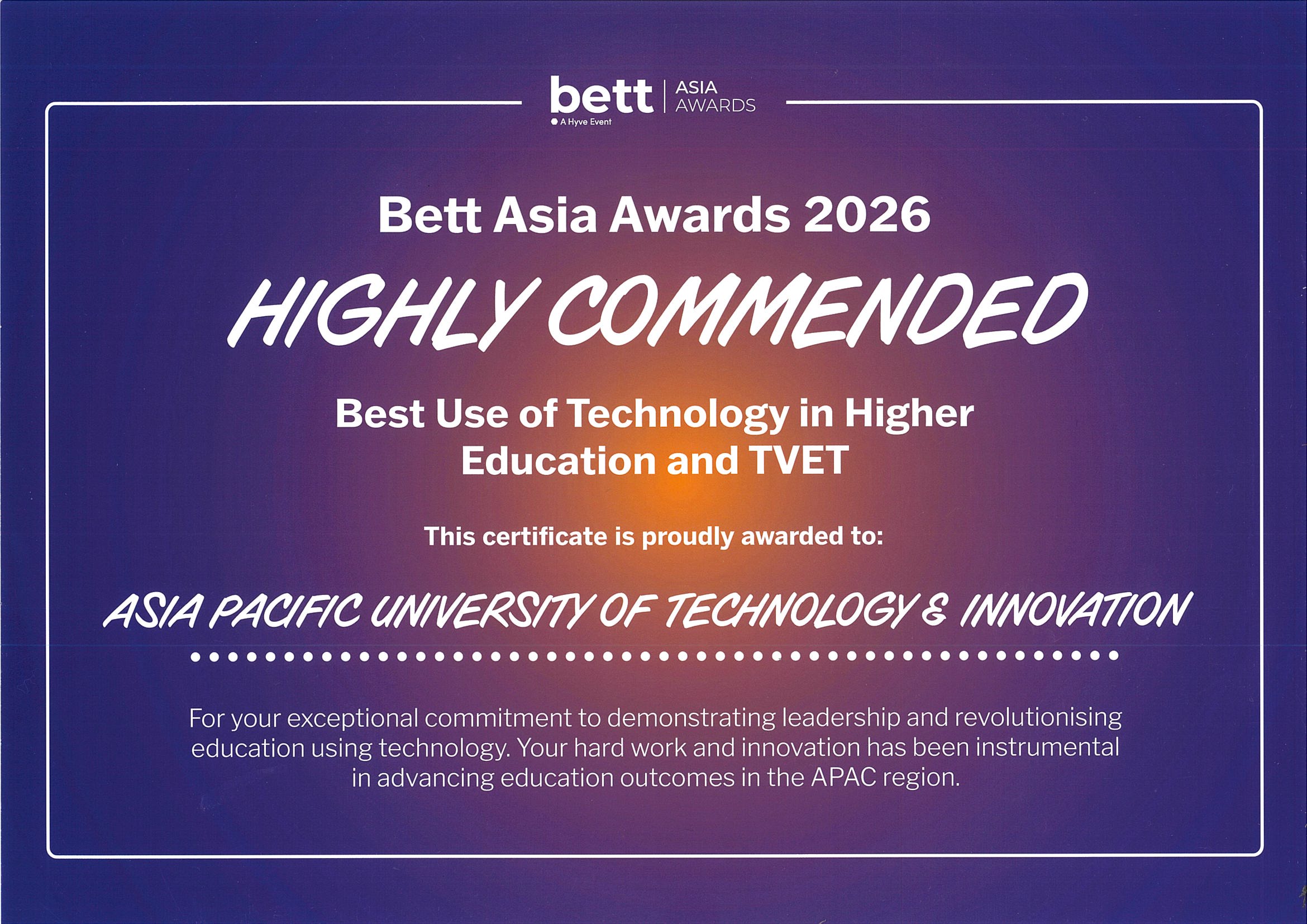
AIDE was named Highly Commended in the Best Use of Technology in Higher Education/ TVET category at the BETT Asia Awards 2026. It was also selected by the UNESCO Regional Office for East Asia as a good practice case under its Call for Good Practice Cases: When AI Meets Design.
Together, these recognitions acknowledge AIDE's contribution to equipping educators and students with the knowledge, confidence and practical skills to use generative AI effectively while upholding academic integrity and ethical responsibility.
BETT Asia Recognises Technology-Enabled Learning
The BETT Asia recognition was presented at the awards ceremony held on 23 September 2026 at the Mandarin Oriental Hotel, Kuala Lumpur.
Representing APU to receive the commendation were Professor Dr Andy Seddon, Senior Director, Partnership & Standard, and Ms Rabia Anwar, Lecturer at the Digital Learning Hub.
The commendation recognises APU's efforts to develop AI capabilities that address practical educational needs, demonstrating how technology can enhance teaching and learning when applied with purpose and responsibility.
UNESCO Recognises Responsible AI as Good Practice
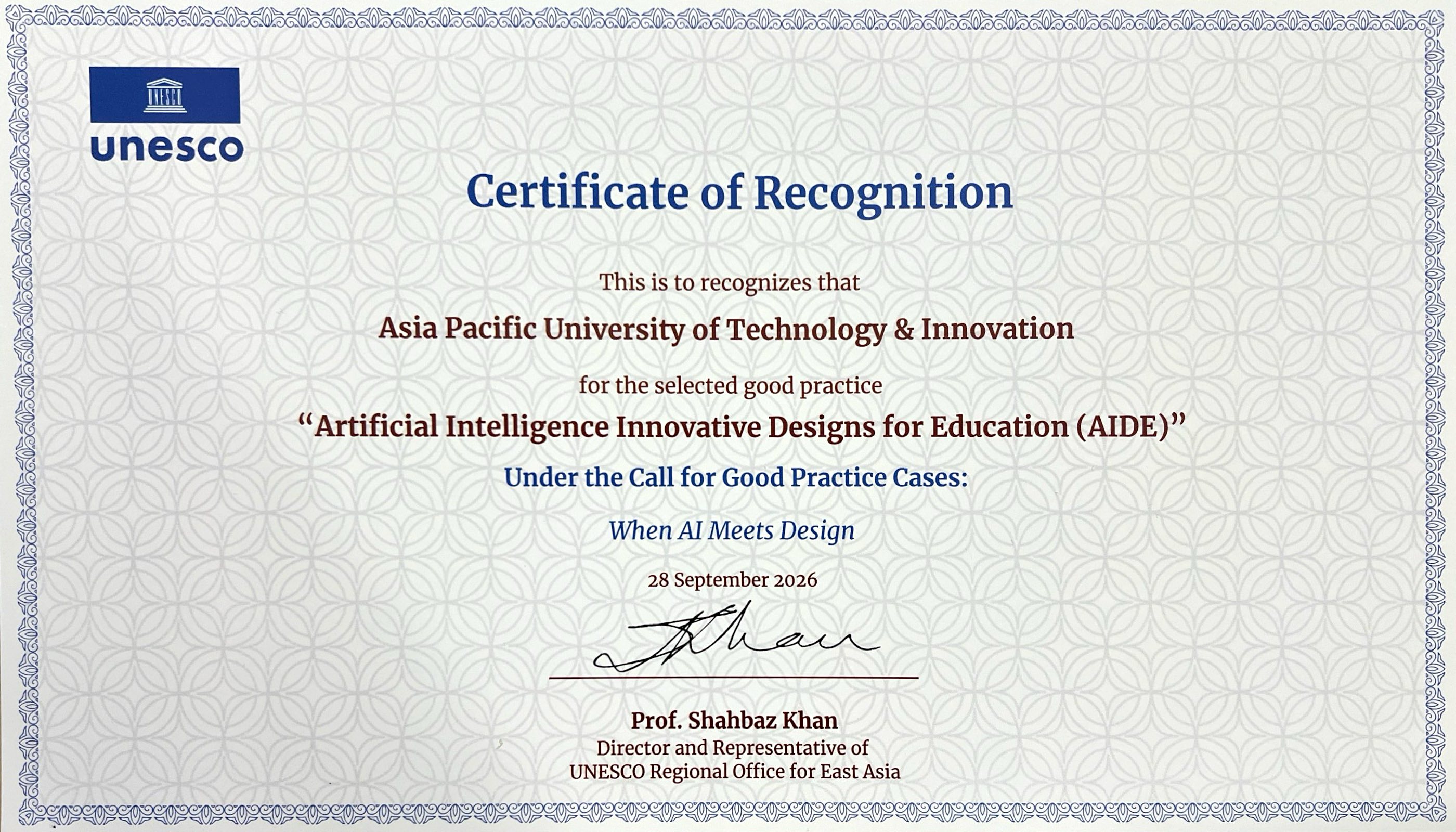
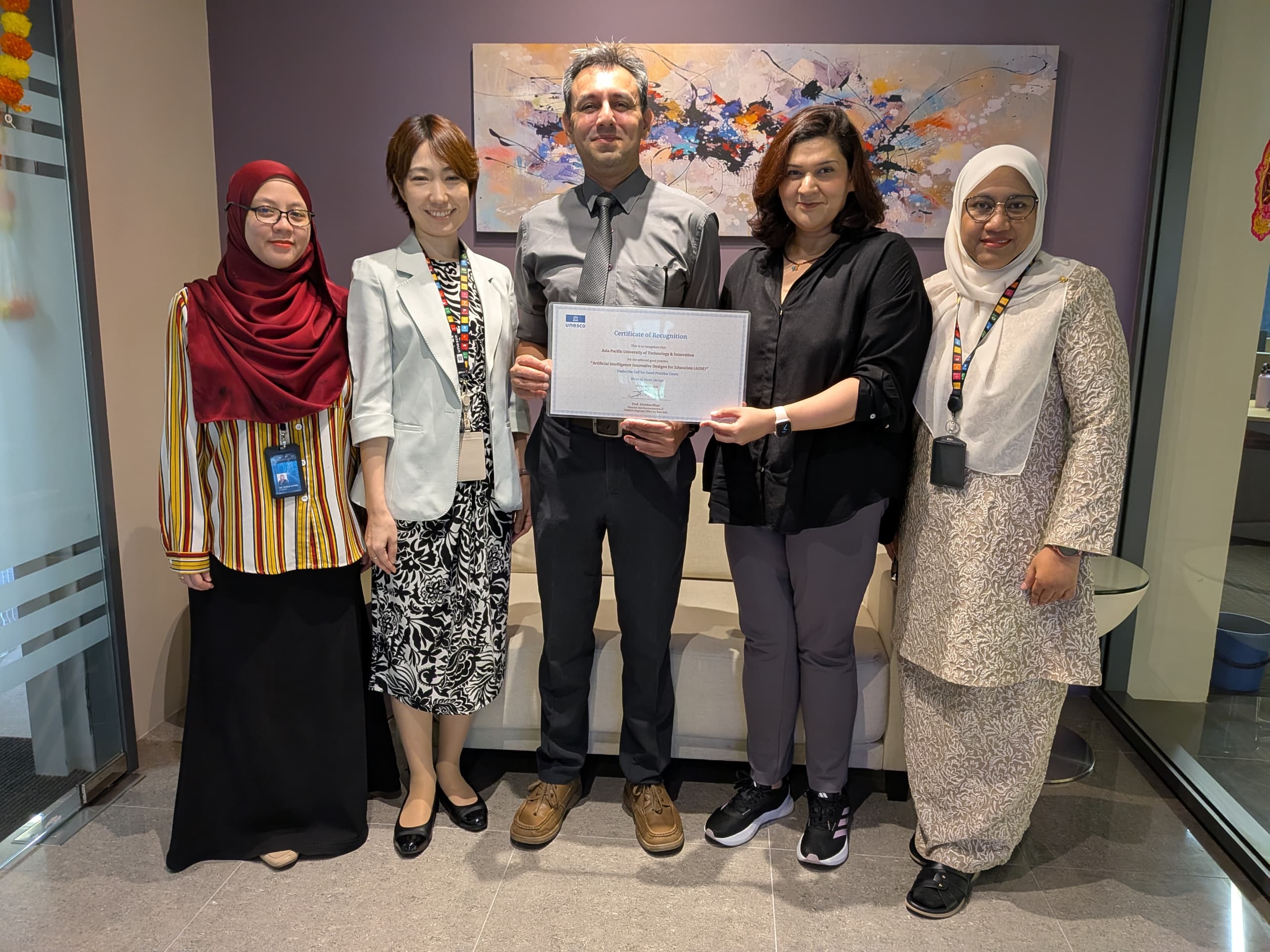
Further strengthening AIDE's international standing, the UNESCO Regional Office for East Asia selected the initiative as a good practice case under its When AI Meets Design programme.
The selection acknowledges APU's approach to integrating generative AI into education through structured training, ethical awareness and practical application.
It also highlights the growing importance of helping educators and students develop the critical judgement needed to use AI responsibly while maintaining the human elements of teaching and learning.
Building AI Confidence Beyond the Classroom
Spearheaded by Prof Dr Abtar Darshan Singh, with close support from Ts Jonathan Kovilpillay and Dr Fahd Ali Raza, AIDE brings together three complementary components: the AIDE training series, the AI Amplified Certification series and the ASEAN Stakeholder Summit on Generative AI in Education.
The AIDE training series was also co-developed through a collaboration under the UNESCO Chair initiative with Dr Vaikunthan Rajaratnam of Khoo Teck Puat Hospital, Singapore.
Empowering Educators and Students for an AI-Driven Future
Commending the team on the international recognitions, Prof Abtar emphasised that AIDE's greatest achievement lies in the people it has empowered.
“These international recognitions are an encouraging affirmation of our team's collective efforts. More importantly, they remind us why AIDE was created: to help educators and students approach AI with confidence, sound judgement and a strong sense of responsibility.”
“Our goal has never been simply to teach people how to use AI, but to empower them to question, evaluate and apply it meaningfully. We hope to continue sharing this approach with wider education communities, ensuring that technology strengthens rather than replaces human creativity, critical thinking and ethical values.”
For further information on AIDE and upcoming training opportunities, visit HERE.
News & Happening
Download e-Brochures
Intake Calendar
Want to know more ?
Let’s Connect