Two teams from Asia Pacific University of Technology & Innovation (APU) won Silver Awards at IUCEL 2026 for their innovative e-learning solutions: Northern Wau Quest, a digital experience promoting Malaysian kite heritage, and Help! I Need FYP Proposal, an AI-powered platform that guides students in drafting research proposals while ensuring critical thinking through mandatory human verification.
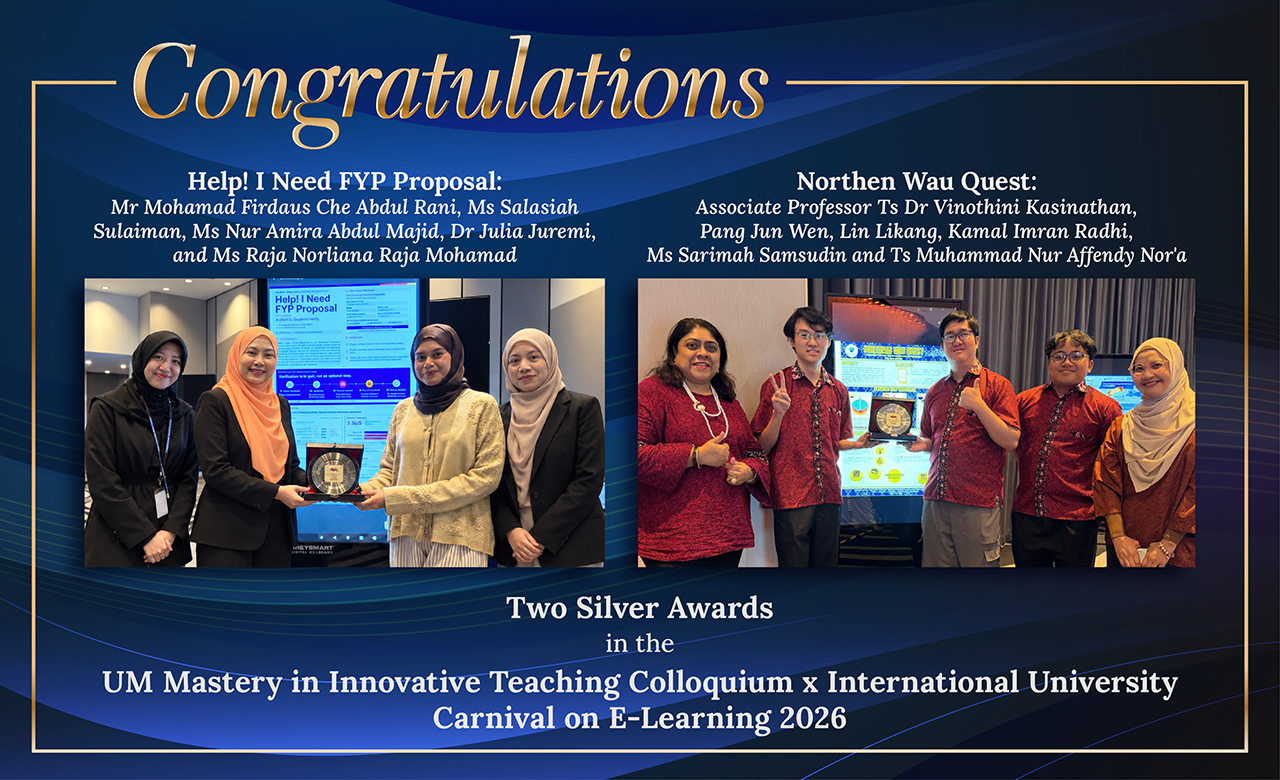
Two brilliant teams from Asia Pacific University of Technology & Innovation (APU) have secured silver awards at the prestigious UM Mastery in Innovative Teaching Colloquium x International University Carnival on E-Learning (IUCEL) 2026.
Showcasing groundbreaking projects that bridge cultural preservation with cutting-edge artificial intelligence, APU’s educators and students proved that true academic innovation puts human learning at its heart.
Led by Associate Professor Ts Dr Vinothini Kasinathan as project mentor and research lead, alongside Ms Sarimah Samsudin from APU’s School of Computing (SoC), an interdisciplinary team set out to breathe new life into Malaysian tradition.
The student members — Mechatronic Engineering undergraduates Pang Jun Wen and Lin Likang, alongside Digital Forensics student Kamal Imran Radhi — co-created ‘Northern Wau Quest’.
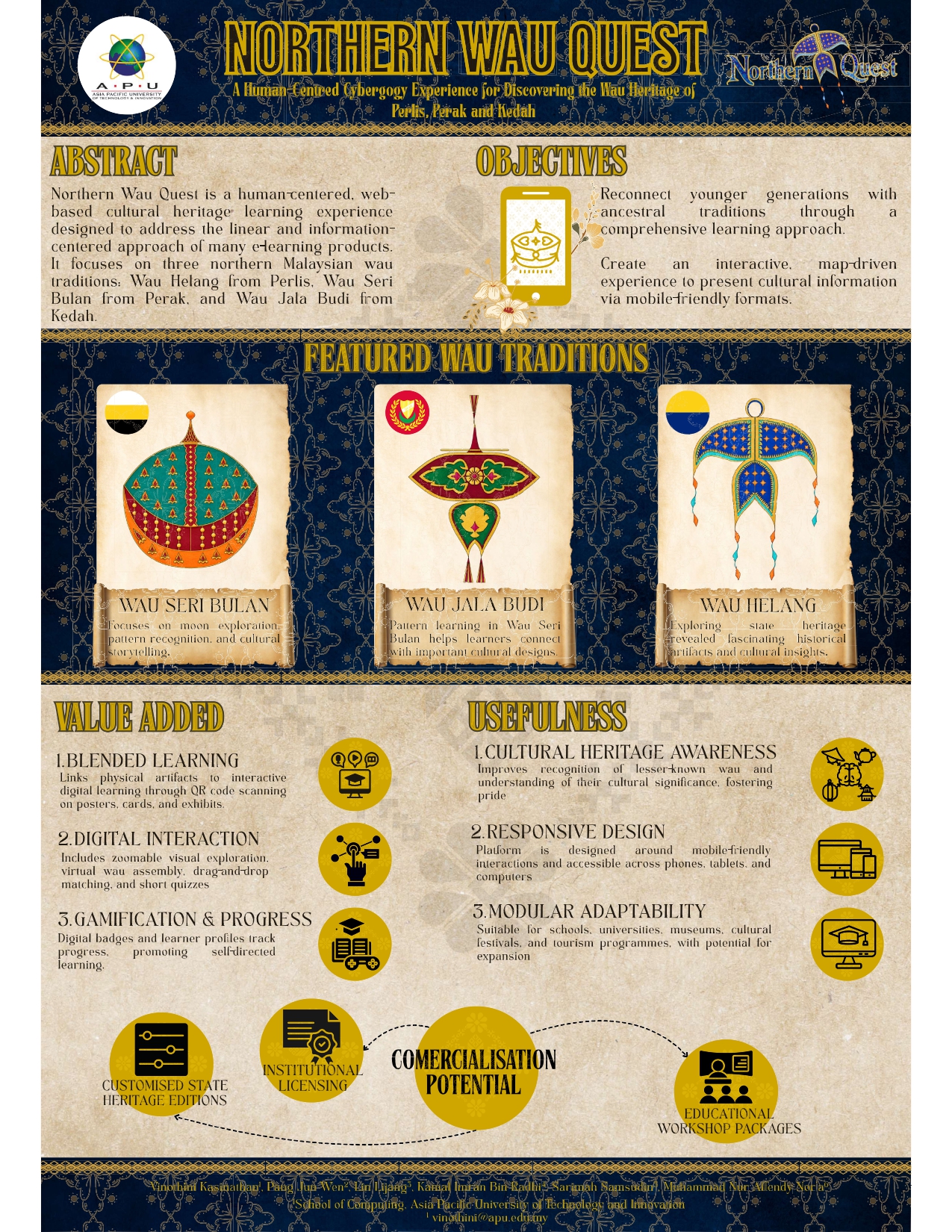
This immersive, human-centred cybergogy experience introduces younger generations to the rich Wau (kite) heritage of Perlis, Perak, and Kedah.
Following their initial participation in CIPTA 2026, Dr Vinothini spurred the team forward to challenge themselves against seasoned academics at IUCEL 2026.
Stepping beyond their comfort zones, engineering and forensics students tackled application development and high-stakes pitching.
“Running on zero sleep, hopes, and prayers, we were terrified of screwing up the presentation,” admitted Kamal Imran Radhi, Pang Jun Wen and Lin Likang.
“But we have to push out of our comfort zone to grow, and it totally paid off,” highlighting how the experience sharpened their adaptability, problem-solving, and teamwork.
Northern Wau Quest serves as a stepping stone for Virtual Intelligence for Nusantara Origins (VinoX), Dr Vinothini’s vision for an AI-driven cultural heritage learning ecosystem.
“A medal recognises an achievement, but the confidence, courage, and experience students gain along the way are what make the journey truly valuable,” added Dr Vinothini.
Generative AI with a human touch
APU’s second Silver went to an all-academic team from the School of Computing (SoC) and School of Technology (SoT) — Mr Mohamad Firdaus Che Abdul Rani (SoC), Ms Salasiah Sulaiman (SoC), Ms Nur Amira Abdul Majid (SoC), Dr Julia Juremi (SoT), and Ms Raja Norliana Raja Mohamad (SoT).
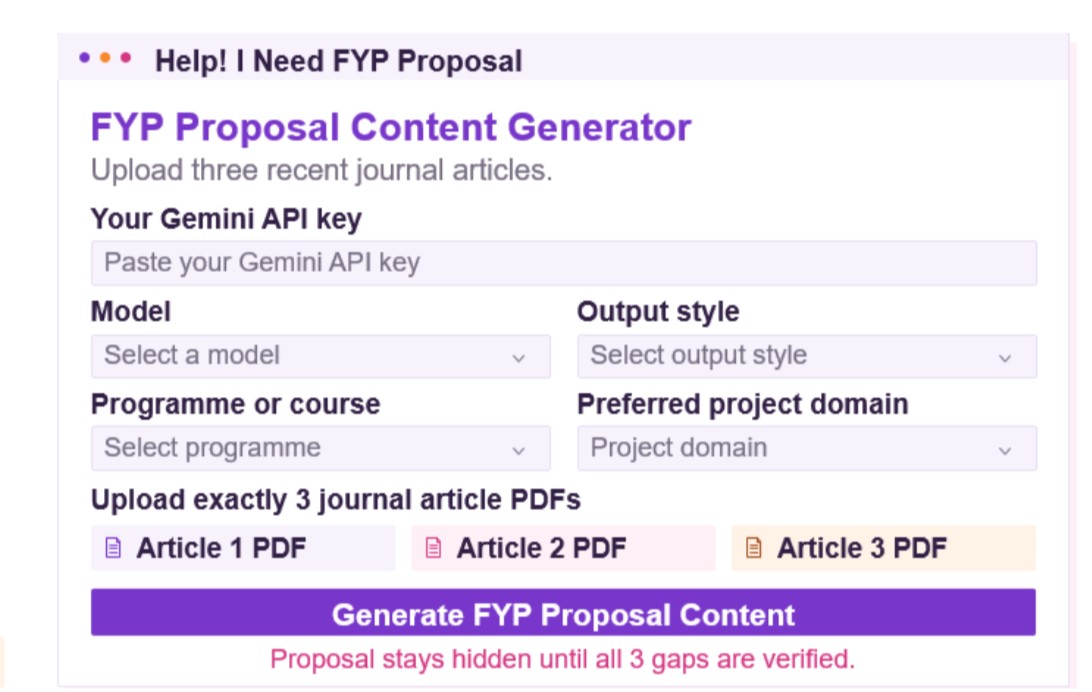
Together, they developed Help! I Need FYP Proposal, a web-based Generative AI platform designed to help students craft structured, literature-grounded Final Year Project (FYP) proposals.
Powered by Google’s Gemini AI, the system analyses three user-uploaded journal articles to generate research gap analyses, project titles, objectives, and alignment with UN Sustainable Development Goals (SDGs).
Unlike conventional AI tools that generate instant answers, this system enforces a ‘human-in-the-loop’ gate.
Students cannot access their final proposal until they actively verify the AI-generated research gaps against their source articles; providing exact page numbers, sections, or paragraphs as evidence.
“We wanted AI to support students’ learning without replacing their critical thinking or academic judgement,” explained team representative Ms Salasiah Sulaiman.
“By combining AI assistance with mandatory verification, we encourage students to become active evaluators rather than passive recipients.”
To tackle common generative AI pitfalls like ‘hallucinations’ (unsupported claims), the team rigorously tested the platform with 119 students.
While achieving a solid initial satisfaction score of 3.39 out of 5, the evaluation provided vital insights for refining usability, system reliability, and evidence-location guidance.
Next steps for the team include securing copyright protection, refining the system’s interface, and scaling up for broader classroom implementation across APU modules, with an eye towards future commercialisation.
Both accolades underscore APU’s unwavering commitment to experiential learning and responsible technology adoption.
By going beyond mere automation, these award-winning teams demonstrated that the future of e-learning belongs to technology that meaningfully empowers human intellect.
“The greatest achievement is not simply winning a medal but creating an innovation that can make a meaningful difference in how students learn,” concluded Ms Salasiah.
“Winning Silver is an important milestone that motivates us to aim even higher.”
News & Happening
Download e-Brochures
Intake Calendar
Want to know more ?
Let’s Connect